Sharing with you things that are on my mind...Maybe yours too. Come back to Wrights Lane for a visit anytime! And, by all means, let's hear from you by leaving a comment at the end of any post. THE MOTIVATION: I firmly believe that if I have felt, experienced or questioned something in life, then surely others must have too. That's what this blog is all about -- hopefully relating in some meaningful way -- sharing, if you will, on subjects of an inspirational and human interest nature. Nostalgia will frequently find its way into some of the items...And lots of food for thought. A work in progress, to be sure.

26 March, 2016

PREPARING A SPECIAL UKRAINIAN EASTER MEAL FOR ROSANNE AND I

The makings for our special Easter treat.
I went grocery shopping for our Easter dinner Friday afternoon.  Some of the items on my list included lean Kolbassa sausage, sauaerkraut, havarti cheese, cabbage, onions, egg bread, horse raddish, beets and eggs,

"...Not ingredients for your traditional Easter dinner," you might well exclaim with a degree of shock.

Well, I've got news for you!  Those items are very traditional if you are of Ukrainian or Polish heritage as is my wife Rosanne.

Because she is not well and as a special treat for her this Easter, in a weak moment I promised to prepare a full Ukrainian Easter meal, duplicating as much as possible the menu she remembers sitting down to as a child.  It will be no small undertaking for a Canadian kid who grew up on baked ham and scalloped potatoes for Easter, but I like to live dangerously and I'm always up for a challenge.

To better prepare myself for this culinary adventure, I determined that it was in the best interests of the two of us to do a little research and what better source for information than good old Ukrainian cook books, one in particular having been published by ladies from St. Demetrius parish in Toronto.

Ukrainians approach the celebration of their religious feast days with spiritual devotion as well as traditional rituals.  Present day Ukrainian Easter traditions are a rich blend of ancient pagan rituals and Christian idealogy and practises.

Much to my interest, I found that with the arrival of Christianity to Kyivan Rus in 988, many of the pagan spring rituals were incorporated into the Christian celebration of Easter.  The Christian church added a new perspective to these seasonal celebrations.  In addition to physical preparation, the six-week period of "Pyist" (Lent) became a time for spiritual renewal, fasting, forgiveness and meditation.  It was also a time for the writing of "pysansky".  In pagan times pysansky were considered magical talismans.  Today's pysansky in the form of Easter eggs, incorporate not only ancient geometrical designs and colours, but also Christian symbols in beautiful vibrant colours, and are given as tokens of love and affection.

As with the traditions of Christmas Eve and the food associated with them, the Easter foods, especially those placed in baskets for blessing by a priest at Easter worship services, have special meaning.

Paska, the Easter bread, symbolizes the joy of new life through Christ.

Eggs are symbolic of Christ's death and resurrection.

Salt is essential to our bodies as Christ is to our souls.

Horseradish is blessed as a reminder that even though there is bitterness in life, all pain and suffering can be overcome through Christ.

Dairy and meat products (butter, cheese, ham and kolbassa) are a reminder of the goodness of God's creation.

A candle is always present as a reminder that Christ is the light of the world.

Taking all of the forgoing into consideration, the meal that I will be preparing for Rosanne will consist of "favourite" foods that stand out in her memory of family Easter dinners when she was a little girl i.e. paska (egg bread), hard-boiled eggs, kolbassa, ham, horseradish/beets combination as a garnish, Havarti cheese, kapusta (a boiled side dish consisting of cabbage, sauerkraut and onions with thyme seasoning) and potato salad.  Of course desert will consist of nothing else but cherry cheesecake.

All in all, a pretty simple meal to put together, but wish me luck anyway.  I can always use it!

"Smacnoho!" as they say in the Ukraine, or "Bon appetit!" in French.

24 March, 2016

KIDS TODAY WANT TO KNOW THE TRUTH...TELL THEM ABOUT IT

The following is a sermon I prepared several years ago when I was still an active lay preacher and before experiencing a spiritual turnaround, maybe I should say “a downturn”.  I never got to deliver the message.  It has been gathering dust in a computer file, but as a life-long youth leader and coach I continue to believe strongly in its premise.

Make no assumptions about biblical literacy. Kids today are very open spiritually, but religion does not imply Christianity. Even church kids are adopting the notion that there are many valid expressions of faith and roads to God. As parents and youth leaders today it is imperative that we know what we believe, and through relationships and open ears, earn the right to challenge the thinking of young minds.

Trust me, teens want to know who God is and what He says about himself.

Technological advances, geopolitical changes and shifting relationships have caused young people to expect change -- even to become comfortable with it. As a result, leaders have more freedom than ever to make immediate, effective changes in programs and processes to discover what works with their group. The drawback is an unusually high standard of what is worth their attention, so programs must keep moving with little dead space or predictability.

Today’s student, very literal and visually oriented, responds well to plain talk about personal, practical issues and experiences, especially when learning is hands-on and incorporates contemporary media and technologies. Although the speed and accessibility of information has conditioned students to make decisions with less thought and reflection

This means that teens are often intolerant of anyone who draws a line in opposition to anything culturally acceptable. While God’s unchanging truth is always relevant, it’s vital that approaches to students be blended and balanced with grace. Since they want to reach out to a broader spectrum of people, they will be more likely to embrace ministry that demonstrates real, active compassion. This must mark an unwavering stance on biblical principle, or even sincerely searching students will tune out.

Immorality at least acknowledges a standard of deviant behavior -- amorality often concedes no standards at all. Over 60% believe that you cannot know absolute truth. One third say that something is morally/ethically right if it works and is perceived as good. Different people, in the same situation, can define truth in totally conflicting ways—and both still be considered right.

The principles behind the precepts, with God’s loving care and unchanging character as the basis of right and wrong, need to be emphasized along with reasoned discussions on choices, consequences, and spiritual cures. Dare to ask the tough questions the world will confront them with, and help them develop a faith that is not deterred by deviant standards. Training that equips young people to share absolutes in a morally and spiritually pluralistic society is essential.

Think about it -- we (families and churches) have been given the awesome privilege of leading, training, and equipping what may be the final generation. That is the responsibility that lies before us now that we are well into a new millennium. It is most certainly a disciple-making challenge to be taken very seriously.

Young people do not learn through the process of osmosis…It takes strong, committed and principled adults to knowingly mold their minds and to lead them to the truth that they are more than receptive to. 

Surely I am not talking to myself, as I so often do!?

With more faith in the youth of today than I confess to having in most fellow adults, I remain guardedly optimistic.

13 March, 2016

I LITERALLY GET LOST IN MY DREAMS

I regularly have a number of recurring dreams, some take place on the baseball diamond or a golf course while others involve struggling to meet a newspaper press deadline. More often than not, however, my nocturnal wanderings are the result of being hopelessly lost and never finding my way to a destination. Sometimes too, I lose my car in a parking lot and the fact that I cannot find the parking lot only serves to compound the problem.

I generally wake up in the morning feeling very much like I have been dragged through a knot hole. I have the “getting lost” dreams so often, and vividly, that I recently took it upon myself to do some research on the subject.
No, I'm not dead, just lost in one of my dreams.


To a degree, I have been somewhat relieved to learn that lost dreams and dreams about searching for lost objects or not being able to find your way back, are common in all age groups. These dreams have much to do with insecurities, frustrations or losses in your waking life. Dream therapists say that this type of dream may also be an indication that you are fearful of being unable to attain set goals for the future. It could also mean that you do not have any defined goals and have been procrastinating on them. Feelings of anxiety about a new situation, a move to another location and fitting in socially or an impending deadline set either by someone else or yourself may trigger these dreams.

Dreaming of lost objects, I find, usually is an indication that there is something in an individual’s waking life that has in fact been lost. It may even represent a part of oneself that has disappeared due to unwanted concessions in personal or business affairs.

So far so good…Most of the forgoing certainly can, and does apply to me.

Some psychologists equate these types of dreams with new beginnings and change, and the fear of letting go of the familiar in certain areas of your life.

When evaluating these dreams, it is suggested that the dreamer determine any losses that may be felt or experienced in waking life. From those situations, you may discover that you have some buried feelings that have resurfaced. This might be the time to face them, and if you do, these dreams will ideally begin to fade.

So does this all mean that at my advanced age I should start setting goals again, when in fact I ran out of defined goals about 15 years ago? My biggest goal nowadays is waking up in the morning.

What can I do about feelings of insecurity, frustration and losses in my life that I long ago put behind me? I try to suppress such negative feelings whenever they resurface to haunt me.  Could be that certain negative experience lingers in the back of my mind in spite of my best efforts to dispense with it.

Admittedly, I am a procrastinator…Have been most of my life. In fact I have become pretty efficient at putting things off.

On that note, I think I will give this subject more thought after a good(?) night’s sleep. Maybe, just for once, I will find out where I am going -- and actually get there.

Once a dreamer, always a dreamer!

10 March, 2016

Bruce Power continues to make improvements to emergency preparedness

From time to time I pass on information about the Bruce Power Nuclear Site (located on Lake Huron at Tiverton, between Kincarden and Saugeen Shores) because of its massiveness and importance to the economy and safety of the community in which I live.

Today, March 11th (2016) marks the fifth anniversary of the unprecedented earthquake and tsunami that hit Japan and damaged the Fukushima Daiichi nuclear facility.  Although the facility withstood the 9.0 magnitude earthquake as per its design, a tsunami washed out the back-up generators at the facility, challenging the facility and leading to a nuclear event that was widely publicized.

It is estimated that 20,000 people died as a result of this natural disaster while the nuclear event, to this day, has not resulted in a single death due to radiation exposure. The world’s nuclear industry took this event extremely seriously, however, consistent with the industry’s commitment to Safety First through continuous improvement.

Though the CANDU reactors used on the Bruce site are a fundamentally different design than those in Japan, the Canadian nuclear industry immediately began reviewing its emergency protocols, availability and robustness of equipment back-ups and abilities of its emergency services organizations.  Canada’s nuclear operators recognized the importance of building on lessons from this event, despite the significant differences within the Canadian context to make nuclear facilities safer and strong.

In addition, it was important to reassure the public about the high levels of safety at Canada’s nuclear plants.  In the five years since Fukushima, Bruce Power has made continuous improvements on its site, making it safer and stronger in the process. A few of the improvements include:
  • Acquiring five new fire trucks that are stored off site and on high, dry ground. They’re specially designed to pump cooling water directly from Lake Huron into our reactors and fuel bays in the unlikely event we lose all emergency back-up generators and cooling systems.
  • Purchasing nine back-up generators that are stored off site, on high, dry ground. They can be deployed to either station and can be operational within 30 minutes, in the unlikely situation that the two layers of safety systems built into the station design were to fail.
  • Building a state-of-the-art Emergency Management Centre at the Bruce Power Visitors’ Centre. This facility will act as the control room for any emergency situation and allows for a clear and efficient chain of command. We have also implemented the Incident Management System for emergency response, bringing us in line with emergency response organizations.
  • Increasing off-site radiological monitoring equipment so it now provides real-time data.
  • Providing potassium iodine tablets to all residents within a 10 km radius in the unlikely event of a nuclear emergency.
  • Receiving Canada’s first emergency test broadcasting license for portable AM units, which will make communicating during an emergency more effective than ever before. We have also collaborated with the Municipality of Kincardine to deploy ALERT FM radios in all homes within a 10 kilometre radius of the site. The ALERT FM receiver is linked to the Emergency Alert Ready System and will broadcast all Threat to Life Alerts with an audible alert and text message within seconds.
  • Continuously training to ensure our emergency response organization is prepared for a crisis caused by a natural disaster or nuclear emergency. This includes training on payloaders and tractors, which may be required to move debris from roads or deploy back-up generators across site.


For more information on Bruce Power’s emergency response improvements since the nuclear event at Fukushima, watch the video above.

More About Bruce Power

Bruce Power operates the world’s largest operating nuclear generating facility and is the source of roughly 30 per cent of Ontario’s electricity. The company's site in Tiverton, Ontario is home to eight CANDU reactors, each one capable of generating enough low-cost, reliable, safe and clean electricity to meet the annual needs of a city the size of Hamilton. 

Formed in 2001, Bruce Power is an all-Canadian partnership among Borealis Infrastructure Trust Management (a division of the Ontario Municipal Employees Retirement System), TransCanada, the Power Workers’ Union and the Society of Energy Professionals. A majority of Bruce Power's employees are also owners in the business. 

07 March, 2016

NO ENERGY?...WHAT'S THE MATTER?

We have been conditioned to think of energy as a force that either exists or does not exist...As humans, we think that we either have it or we lack it.

The new science, however, accepts that the universe (including we ourselves) is made up of energy, not matter. This is not actually anything new -- it was posited by Socrates in Europe way back when, and by the ancient rishis in India thousands of years before that.  Socrates said that energy, or soul, is separate from matter, and that the universe is made of energy, pure energy which was there before man and other material things like the earth came along.

However at the end of the 17th century Newtonian physics became the corner-stone of science, and it was based on the theory that there is only matter and nothing else -- the whole universe is a machine, made of matter, and so are we. Medical science is still stuck in the Newtonian concept, even though the rest of science has now moved on to quantum physics.

Interestingly, Quantum physics says that as you go deeper and deeper into the workings of the atom, you see that there is nothing there, just energy waves. It says an atom is actually an invisible force field, a kind of miniature tornado, which emits waves of electrical energy.  Those energy waves can be measured and their effects seen, but they are not a material reality, they have no substance because they are...well, just electricity. So science now embraces the idea that the universe is made of energy.

It should be stated here that Quantum mechanics allows for a type of divine action that does not violate the laws of physics and yet accords with scriptural accounts of God’s providence and miracles. It is our belief that God operates within the laws of nature, or, as Robert Russell refers to it, “noninterventionist divine action." This piece does not seek to prove definitively that such action occurs or that it is the only way in which God operates; rather, scientifically speaking, the door is open for its possibility. In our previous Wrights Lane post we addressed a "divine energy" that is at our disposal and how we can become a conduit for that energy by sharing it with others.

We are of course made up of atoms. And atoms are continuously giving off, and absorbing, light and energy, all the time. It doesn’t stop even when we sleep. Every cell in the body has its atoms lined up in such a way that it has a negative and a positive voltage, inside and outside. So every cell in our body is a miniature battery. Each cell has 1.4 volts of energy – not much, but when you multiply by the number of cells in your body (50 trillion) you get a total voltage of 700 trillion volts of electricity in your body. Pretty strong stuff! This is what the Chinese call ‘chi’, and is also the energy used in hands on healing. It can even be measured outside the body for a certain radius, depending on the sophistication of the instrument. And guess which has the stronger electro-magnetic energy field – your head or your heart?

Now here is another interesting fact which relates to our lives:  Each atom has its own distinct frequency, or vibration. And quantum physicists study the energetic effect when atoms collide, not their ‘matter’. What they see is that when two atomic waves meet, they either meet in sync, creating a constructive or harmonious effect, or they meet out of sync, creating a destructive effect in which they annul each other.

Dr. Bruce Lipton, a former professor of medicine at Harvard University and author of the best-selling "Your mind is greater than your genes", explains that if you drop two equal pebbles at exactly the same time into water, from the same height, they will both produce the same wave ripples, i.e. their waves will be in harmony with each other, and when their ripples meet the combined effect will be an amplification of the wavelength.  In other words the merged waves become more powerful. But if you drop the pebbles from different heights or a millisecond apart, then when the resultant waves meet they will not be in harmony and will cancel each other out.

Exactly the same thing happens when atomic energy waves meet – they either have a constructive effect (become more powerful) or a destructive effect. Because we are all created of atomic energy waves, and because it is impossible to separate waves, the new science says what Osho was saying over 40 years ago: we are all connected - our waves are always meeting and getting entangled in each other. Dr Lipton says the result of such invisible meetings we call ‘good vibes’ and ‘bad vibes’, depending on whether the other waves we meet are in sync with us or out of sync. No wonder so many people were ‘magnetically attracted’ to Osho and felt peaceful and harmonious in his presence.

This means it is important to be aware of whether you are in an environment where you are getting entangled in destructive energy waves or constructive energy waves. The cells that make up our bodies know instinctively what is nourishing and what is toxic (Lipton demonstrates this with cells in petri dishes which move away from toxic stuff and towards nourishing stuff). And in fact all animals and plants communicate through vibrations, i.e. by sensing whether the energy is good for them or not. But we have been taught not to listen to our feelings but instead to what people say, and have said over the centuries. So we are not trained to use our ability to sense energy, even though we have it just as all plants and animals have it.

Because I am of simple mind, I used to rigidly contend that I did not want to entertain anything that confused or complicated "the faith (teachings) of our fathers", but today I find myself increasingly fascinated with new age science and philosophy -- in fact, I find it mind-broadening.

Only problem is, I'm not sure what to believe...Know what I mean?

04 March, 2016

LORIE BROUGHT HER DIVINE ENERGY INTO ROSANNE'S LIFE


The following is a rather involved story with multiple aspects to it.  It will take a few paragraphs for me to zero in on the ultimate moral behind it all but stay with me, I will get to it -- I promise.

Rosanne and I had been through a very tiring and trying day yesterday at the London Region Cancer Centre.  Coupled with everything else going on in our life at present time, we remained physically exhausted and emotionally drained this morning.  Things did not auger well for the balance of our day.

For the first time since her Mantel Cell Lymphoma diagnosis back in November, Rosanne was uncharacteristically distraught.  Completely overwhelmed and giving in to debilitating fatigue, she cried out of frustration in admitting to uncertainty about her ability to cope much further with the rigors and challenges of life in general. With a lump in my throat, I empathized and knew exactly where she was coming from...I shared much of those same feelings.  But I'm getting slightly ahead of myself.

Habitually, before preparing breakfast and getting Rosanne ready for her day in ways known only to primary caregivers, I retire to my study for a quick check of emails and any interesting overnight social media activity.  This morning in firing up my trusty "ThinkPad" I accidentally disturbed a pile of papers on my desk, exposing notes I had made some time ago.  (I am always jotting down notes for future reference, and more often than not end up forgetting about them.)

I cannot readily recall what motivated me at the time but in bold letters at the top of this piece of wrinkled copy paper I had highlighted the words "There is a Divine energy at our disposal, Christians call it God."  My notes went on to ask a question: "How do we use that energy?" which I seemed to answer with the notation: "Share it with others, become a conduit with the energy flowing through you.  Do unto others..."

Those random notes would prove to have particular relevance for me as the day progressed and it took the form of an out-of-the-blue telephone call.  By means of backgrounding, it is pertinent to explain that in December, Rosanne was experiencing problems reading print of any kind and distinguishing faces on TV.  We subsequently scheduled an eye examination for her that resulted in a prescription for reading glasses. Nothing immediate could be done for her distance vision because she had cataracts removed several years ago and lenses implanted.

Optician Lorie Carey, who with her husband co-owns Carey Optical of Port Elgin, is a very professional young woman with a special infectious demeanor about her.  She took great pains to advise Rosanne and to measure her for a suitable style of frames taking into consideration her concern about affordability.

Using a selfie stick, Lorie Cary (right) has a little
 fun with a favorite customer.
Worried not only about the cost implications but also concerned over the potential for her eyesight to change even more drastically with ongoing chemotherapy treatments, Rosanne reluctantly re-considered and apologetically cancelled the glasses order by telephone the following day.  Since then, Rosanne expressed on several occasions how badly she felt about cancelling the order because she had been so taken by the care and attention afforded her by Lorie.

Now, back to this morning and the aforementioned surprise telephone call.

"Hello Dick...This is Lorie Carey from Carey Optical," announced the clear, cheerful voice on the other end of the telephone line.  "You were in to see us a few months ago and I felt immediate affinity for Rosanne and something touched me about the way in which the two of you struggled to get her wheelchair through our front door.  I was impressed by Rosanne's cheerfulness in spite of what she was going through but in the end I understood her reservations about new glasses."

Then came a shocking revelation..."I went ahead and had glasses made up for her anyway, because I knew she needed them.  I want Rosanne to have the the glasses at no charge."

Completely taking the wind out of my sails, Lorie explained that she intended to deliver the glasses to Rosanne as a special long-overdue Christmas gift but that she had been so busy and shorthanded at the store that she did not get around to it.  The purpose of the call was to say that after her next appointment she would be on her way to "turn the glasses over (to me)" at our front door.  In spite of my gratitude and appreciative counter offer, she refused any form of reimbursement.

Still stunned, I hung up the phone and announced to Rosanne that I had news that I thought would brighten her day.  How right I was!

Unfortunately, I was out on an errand when Lorie delivered the glasses. Rosanne heard her at the front door and with a loud yell from her lift chair in the living room invited her to come on in.  What ensued was an exchange of "divine energy" between two kindred spirits -- one a conduit and the other a grateful  receiver, both opening their hearts to each other in a rare display of raw affection and energy.

Rosanne is of a soft, sensitive nature and wears her heart on her sleeve. She is an extremely open, expressive woman who demonstrates an unusual compassion for everyone and every thing.  She dispenses the word "love" frequently and freely.  She is demonstrative and highly emotional with the least provocation. To some, I know, she is almost too good to be true with the result she is often not taken as seriously as she deserves to be.  This morning, however, when she told Lorie with tears flowing down her cheeks that she "loved" her and that God would bless her for what she had done, Rosanne truly meant it and I am sure that her heartfelt reaction was taken as intended.

As we discussed the day's events in retrospect, I told Rosanne about the coincidence of notes that I accidentally uncovered earlier that morning and we marveled at how much our dear Lorie had epitomized the "Divine energy" words that I had highlighted.  "She took the ache out of my heart and replaced it with a calm, peaceful feeling," Rosanne added with a palpable renewed energy.

Thank God for the Lorie Careys that present themselves in our lives at times of great need!

POST NOTE: "Divine energy" is described by new age theological thinkers as a healing force that can be developed in all of us. It has been my experience that people like Lorie Carey come by it quite naturally and unknowingly to the benefit of those of us fortunate enough to be blessed by them.  My belief in earthly angels has been substantiated!

02 March, 2016

SPORTS VS. CHURCH IN BRINGING PEOPLE TOGETHER

When I was a young fellow I found myself in a real bind. I had started to play organized baseball and games were played on virtually every Sunday, May to September. The problem was that in those days recreational activities of any kind on The Lord's Day were very much frowned on, in fact if you were a practicing Christian it was considered a sin.

The Lord's Day Alliance, formed by Presbyterians, Methodists, and Congregationalists in 1888 to protect the sacredness of Sunday in Canada, was still a force to be reckoned with in the 1940s and '50s. I well remember that there was a 12-midnight curfew for Saturday dances and that in some communities no inning of a baseball game could start 10 minutes before the bewitching hour of 12:00 a.m.

My mother and father were staunch Presbyterians and it was only because of illness that I would miss attending Sunday School and the worship services that followed. At 16 years of age I even became a Sunday School teacher, so my formative years were firmly entrenched in Church and Christian beliefs and practices.

So it was without the blessing of my mother (my father had passed away) and struggling with pangs of guilt on one hand and a burning passion for the game of baseball on the other, that I began to venture onto the playing field with mixed emotions on Sabbath afternoons. Looking back, I always felt that I did not play my best on Sundays and if I had a bad game, or committed an error, I was convinced that God was penalizing me for playing baseball on His day of rest.

Boy, have times changed in the intervening 60 years. What pained and compromised me as a young athlete, families do not give a second thought today.  When you think of Sunday today, one of two things likely come to mind. Perhaps you think of going to church with your family, like you may do every Sunday. However, there are other activities that take place approximately five months out of the year that captivate a huge percentage of North Americans -- golf, football, fishing and baseball, to name only a few of the weekend distractions. In fact, there is a real argument to be made that sports in general are better at bringing people together than church ever was.


It is really not surprising people feel this way. When you go to a football or baseball game, for instance, suddenly you are best friends with tens of thousands of other people in the stadium. These people don’t care about your gender, sexual orientation, race, or religion. All they care about is that you are supporting the same team. It is a bond that can last for life. It sounds silly, but it’s amazing the extent to which mutual support for a team can draw people together.

Today, more people than ever before are choosing not to attend church. Maybe they simply don’t enjoy it, or maybe they haven’t been accepted into a church because of their lifestyle. There are a lot of different lifestyles that certain denominations have trouble with. One of the most common is the refusal to accept members of the Gay community or views on contraception and abortion. Many religions teach that homosexuality, condoms, and abortions are sins, and that can be ostracizing to some. Thankfully, there are plenty of churches who accept people for who they are.

Watching and playing games on Sunday afternoons can be a great escape. Whether you are watching from home, physically at the game or participating in a recreational activity, it is a wonderful way to forget about the everyday stresses of life, including work, health, and personal relationships. Going to church does not necessarily do that for people. While some might find comfort in going to church and having people pray over them, it can also be a great source of anxiety.
One of the most widely watched television events is the Super Bowl. Even those who do not care about sports attend Super Bowl parties, even if it’s just an excuse to get together with friends. Companies spend millions of dollars just to get a 30 second commercial that will air during the Super Bowl. In fact, it is now expected that the commercials you see during the game will be the best you see all year. Why do advertisers put so much money and energy into these commercials? Because they know they have a larger audience now than they will at any other point in the year. The Super Bowl and Grey Cup bring the American and Canadian people together for one Sunday every year – it is a massive cultural event comparable only to the World Cup in terms of popularity.

While I can take or leave football, some people really do enjoy the game that much. However, some may do it because it is a distraction from everything else they are dealing with. They might feel the most accepted when they are supporting their team on Sunday afternoons, so they have thrown themselves into it completely. In the past, this was a central function of church services. In some ways, sports have supplanted that.

Even though churches are left competing with sports for attention on Sundays, church still does have its place. There are many people who are committed to their faith and those who will put their beloved sport on hold to attend a church service. Still, it’s interesting to think about how much more accepted people might feel watching or playing a game.

Personally, I do not attend church services anymore, but it has nothing to do with acceptance or a preference for sports...It goes much deeper than that and I might write about it some day, when I'm ready.

In retrospect, I am still in that moral bind of my youth.  It has just taken on a different perspective.

27 February, 2016

THERE IS AN INCREASING NEED FOR SIMPLICITY AS WE AGE, SO GO FOR IT!

Accepting major life changes and setbacks can be painfully difficult as we age. We have to overcome fears, anger, and resentments. Reducing expectations is also a part of the aging process but it takes time and patience to overcome our feelings of helplessness and accept our “losses.”

Being a macho kind of a guy, I have always subscribed to the lyrics of a song sung by good ol' country music boy Toby Keith: "I ain't as good as I used to be, but I'm as good once as I always was..." Sadly, I have reached a stage in life where I have to admit that I am no longer even "as good once" as I used to be. So why pretend otherwise?


The older I get the more I admire simplicity. Increasingly, I have the urge to simplify my life, in fact I crave it. By that I mean I only want to spend my time on what is important for me. The first question is: What is that? And the second question is: How can I do it as a caregiver who is required daily to multi-task and juggle more than one ball in the air at a time?

Sometimes living a simple life is actually not that simple to achieve. As soon as we do something meaningful and hopefully successful in our lives, a once simple idea becomes more and more complex. Somewhere along the road we need to simplify again. If we forget to simplify, life gets more complex, confusing and most likely stressful.

Simplicity, I believe, is what is left when we have taken away all that is not necessary. Simplicity is all about essence...and purpose. It means to simplify as much as possible — but not more — to reduce it to it’s essence.  But how do you know what is essential for you? And what is your purpose in life?

The most simple answer: "It’s what is most important" and nothing much else. Personally, "focusing" is the key for me.  I stay away from distractions as much as possible as I focus on one task at a time. It is when I am distracted that I forget something and subsequently get into trouble.  In fact, short-term forgetfulness has become the bane of my existence.  It is routine for my wife to say, "We talked about it not long ago" or to add chastisingly, "I reminded you just a few minutes ago..."  In response I make the oft repeated request: "Don't tell me about it.  If it is important, write it down for me.  Don't overload me with verbage...It tends to go in one ear and out the other."  By degrees, she is catching on to the fact that I ain't as good as I used to be!

Tolerance for irritations, large and small, tends to lessen with the passage of time.  I struggle daily to not sweat the small stuff.  I do not always succeed.

I am victimized by forgetfulness...It adds stress and anxiety to my bi-polar existence and I desperately seek solutions.  The older I get the more too much repetitive information piled on me in one swell swoop overloads me and drives me to distraction.

Clarity helps in staying on what is important and avoiding what is not is very important. Clarity creates simplicity. In order to become clear on what I want or need, I engage in self-reflection through my writing.  Quite honestly, that is my purpose in constructing this post and thanks to readers who are good listeners and stick with me through to the end.

To reduce unclarity(?) we can also set goals that express what we really want. A clear goal helps a lot to get to and to stay on the right track. The moment you set a goal you make a decision about what is more important to you.  But how do you do less and get more?

Doing less may seem pretty hard at first. After all, there is all this stuff on your to-do list, right? The only real thing to ever worry about is not how much you’ve managed to do, but have you done the things that are your top priorities? That’s all you have to really care about.

To make things simple, we can start to systematically get rid of the tasks that just don’t fit in with what matters most.  So you won’t lose much by doing less. In fact, there is the possibility of gaining something.

For the better part of my life I was motivated by the false impression that I needed to be all things to all people.  In all honesty, I do not know where that came from...Perhaps it was the result of an attempt to overcome inadequacies in my own life.  Nevertheless, in retrospect it was an impossible load to place on myself and more often than not I paid a price for the thankless burden of spreading myself too thin.  How I wish now that I had some of that time back and to be able to apply it where it would do the most good in my own life.

People say nothing is impossible but, like Alan Alexander and without apology, I now try to do nothing every day and have learned to to say “no” more often than I used to. When I feel the overwhelming urge throughout the day to take a nap, I give in to the impulse whenever time and circumstances allow.  For instance, after a late lunch today I fell asleep (I call it passing out) with my empty plate on a TV stand in front of me and my dog Lucy on my lap. Seeing the two of us snoozing peacefully together, Rosanne also nodded off.  We all woke up some four hours later, far too late for me to go out for some much needed groceries.  But who cared...tomorrow is another day.

All the time management in the world will not help if I simply have too many commitments to fulfill, and I am too tired to accomplish them. Saying “no” with confidence, possibly with a brief explanation, will probably get more respect than saying “yes” and not being able to adequately deliver. 

And something else...More and more I find myself welcoming silence into my life, I am reminded of the Zen saying: “Do not speak unless it improves on silence.”  Have you ever noticed how energizing and refreshing it can be to do absolutely nothing by spending quality-time with yourself?  Taking time to reflect and to smell the roses...Letting the mind wander in wonderful and amazing ways.

“Loneliness is the poverty of self; solitude is richness of self,” said May Sarton. Solitude means to deliberately spend time alone. Use it to do deep self-reflection and to clear your mind of all the negative impressions life constantly throws at you. That way you create space for self-refreshment and self-renewal. At least that has been my experience.

As I say, to live a simple life is not an easy task in today’s world of constant distraction, information-overload and commitments that are often beyond our control. It needs some work and self-discipline, but for me it is a matter of self-preservation as I spend the rest of my days doing what I am purposely committed to do. It is as simple as that!

23 February, 2016

KIDS DESERVE A "VILLAGE" OF TEACHERS, COACHES AND MENTORS

We understand the benefits of mentoring young people when we hear the powerful stories of teens whose lives have been changed by a single, caring adult. If you listen, those stories are everywhere. Like me, you likely have a story about a mentor from your own youth.

I was thinking about all of this recently and realized that I could actually have a story for at least 50 people who influenced or mentored me in some way during 18 years of growing up in a small, tight-knit community -- parents, school teachers, church leaders, Boy Scout leaders, sports coaches, music instructors and first-time employers. Quite remarkable when you stop to think about it and there is a place in my heart for every one of them.


This all gives credence to the expression “It takes a village to raise a child.” It was for that reason that I tried to “give back” to my communities as a minor sports coach, Boy Scouts Leader, Sunday School teacher and Big Brother when I graduated to adulthood.

It is only natural that mentoring is a factor in positive youth development. Now, one of the largest mentoring studies ever conducted continues to support this thinking. The five-year study was sponsored by Big Brothers/Big Sisters of Canada and it found that children with mentors were more confident and had fewer behavioral problems. Girls in the study were four times less likely to become bullies than those without a mentor and boys were two times less likely. In general, young people showed increased belief in their abilities to succeed in school and felt less anxiety related to peer pressure.

Mentoring relationships with youth are complex and there is more to be learned about what makes them succeed, particularly when mentors are matched through organizations like Big Brothers/Big Sisters and other kinds of nonprofits. In my own experience, young people naturally develop mentee-mentor relationships with adults sometime during their middle and high school years. Non-parent mentors – teachers, clergy, and civic leaders – are highly instrumental in how these teens learn to believe in themselves and tackle challenging goals.

We know too that mentoring is particularly beneficial to disadvantaged teens. A university study showed that youth from disadvantaged backgrounds are twice as likely to attend college when they have a mentor, particularly a teacher. It also showed that less than half of disadvantaged students have any adult mentor at all and that only seven percent named a teacher as a mentor.

We also know that young people who experience discrimination, family stressors, and abuse are less likely to break the law or engage in substance abuse if they have a positive mentoring relationship.

In these the lean and mean days, however, community isn't always what it is supposed to be. We'd all like to think we live in a place where people care about others -- where people pitch in to help when things get rough -- where it's safe to leave the doors unlocked and let the kids play outside.

This isn't always what we experience though, is it? Instead of community, we find alienation, envy and hate. Being poor these days just isn't what it used to be.

During the Depression, there was plenty of poverty and misery. But people connected with each other. They had family and friends around them. Everybody was broke and so everybody was in the same boat. And as everyone who is poor knows, there is nobody who is more generous than another poor person. So people helped each other out. Not only with the physical necessities of life -- such as food, clothing and shelter -- but also with the spiritual and emotional necessities. It's pretty awful when you feel like you are all alone and the whole world is against you. Life is a lot easier when you are part of a network of friends and family, a community, a neighborhood.

Today poor people are pawns in games of poli-tricks. People say, "Pull yourself up by your own bootstraps, my grandfather did". That may be true, but many of those "bootstraps" are no longer available today. And the first and foremost problem is that the supportive community of our parents and grandparents day, “the village”, the neighborhood, that place where people looked out for each other and supported each other, where they shared joys and sorrows, good times and bad times, in many places is no more. It has gone the way of the gaslight, the horse and buggy. And we're paying a really big price for that loss.

It truly does take a village to work with the family to raise a child and weather the storms of life. If we want that kind of support, the place to begin is with ourselves. We can start by reaching out to our network of friends and acquaintances. 


There are many things that we just don't have much control over. But like eating good food, building community is something that we all can do right here, right now, in the places where we live -- whether or not we have a job, an education, or a car. We can make our neighborhood our village and find the truth that humans have always learned the hard way. United we stand, divided we fall -- cooperation is as important as competition. Maybe, at certain times and places, it's more important.

Every kid today deserves a village to grow up in...Sadly, some more than others.

19 February, 2016

IN SPRING MY FANCY TURNS TO THOUGHTS OF A BASEBALL SCHOOL(ING)

Exactly 60 years ago I was exposed to a baseball era that is long gone, but every year at this time memories of attending a baseball school in Cocoa, Florida, come flooding back.  I am sure that it is the same for old Dresden high school chum and baseball teammate Bob Peters who followed a similar route to mine.
Jack Rossiter, left, welcomed Canadian Willie
Walasko of Hillcrest, Alberta, to his baseball
school in 1959.  Willie's dad and sister were 
along for the ride.

To the best of my knowledge, baseball training schools can be traced back to the 1930s and a character by the name of Ray L. Doan whose name was synonymous with the phrase “sports promoter” in those days. His clients included Olympian and pro golfer Babe Didrikson, the Kansas City Monarchs of the Negro leagues, and miscellaneous House of David teams known for mixing their version of the national pastime with beards and a fun-to-watch activity called pepper. He was also the self-proclaimed “father of donkey baseball.”

It should be explained that during this time in history, major league clubs commonly held mass tryouts, hundreds of potential players venturing onto the “apple yards” to vie for spots in a given team’s organization. The shotgun strategy was less cruel than it sounds, as professional baseball could not yet rely on the dynamo of intercollegiate athletics to generate prospects. Some minor league teams were quick to stuff their rosters with green youngsters from open-to-anybody combines or from the baseball "factories" like the one pioneered by Doan.

The colorful Doan’s undertaking, however, meant the most to raw hopefuls who made the pilgrimage to his “All-Star Baseball School” at Hot Springs, Arkansas, in the 1930s. Adolescent males came there from practically every U.S. state and several Canadian provinces, the majority of boys no doubt imagining stardom. The stars in their eyes had names, too: Doan recruited a slew of major leaguers to serve as instructors at his school. Grover Cleveland “Pete” Alexander, Clyde “Deerfoot” Milan, Urban “Red” Faber, and many more taught eager prospects over the six years of the Hot Springs incarnation.

The school operated between 1933 and 1938. In 1939 Doan shifted the enterprise to Jackson, Mississippi, where enrollment flagged. In 1940 and 1941, winding down, the Doan school was lodged at Palatka, Florida. He also tried setting up a traveling baseball school for the summer of 1940, but it seems not to have caught fire. By then, a veritable thicket of schools for budding rookies had sprung up, so Doan’s educational institution was hardly unique. There was, in fact, another such nursery in Arkansas in 1937, in Little Rock under Bobby Harper, who caught for numerous minor league aggregations during the 1920s and 1930s. In 1938 yet another baseball school would arise in El Dorado under Frank “Blackie” O’Rourke, an infielder for six major league clubs over 14 seasons.

Soon thereafter a charismatic Jack Rossiter of Springfield, Illinois, saw merit in starting up his own baseball school in Cocoa, Florida, 
as a way to help find recruits for the major leagues. Rossiter operated an industrial baseball league in Springfield and had ties to the Washington Senators.  He was a member of a Senators scouting staff that included such lofty names as Joseph Cambria, Michael Martin, Spencer Abbott, Zinn Beck, Edward Holly, Leo Lentz, Cecil Travis, Horace Milan, Russell Herrick and Wilfred Lefebvre.

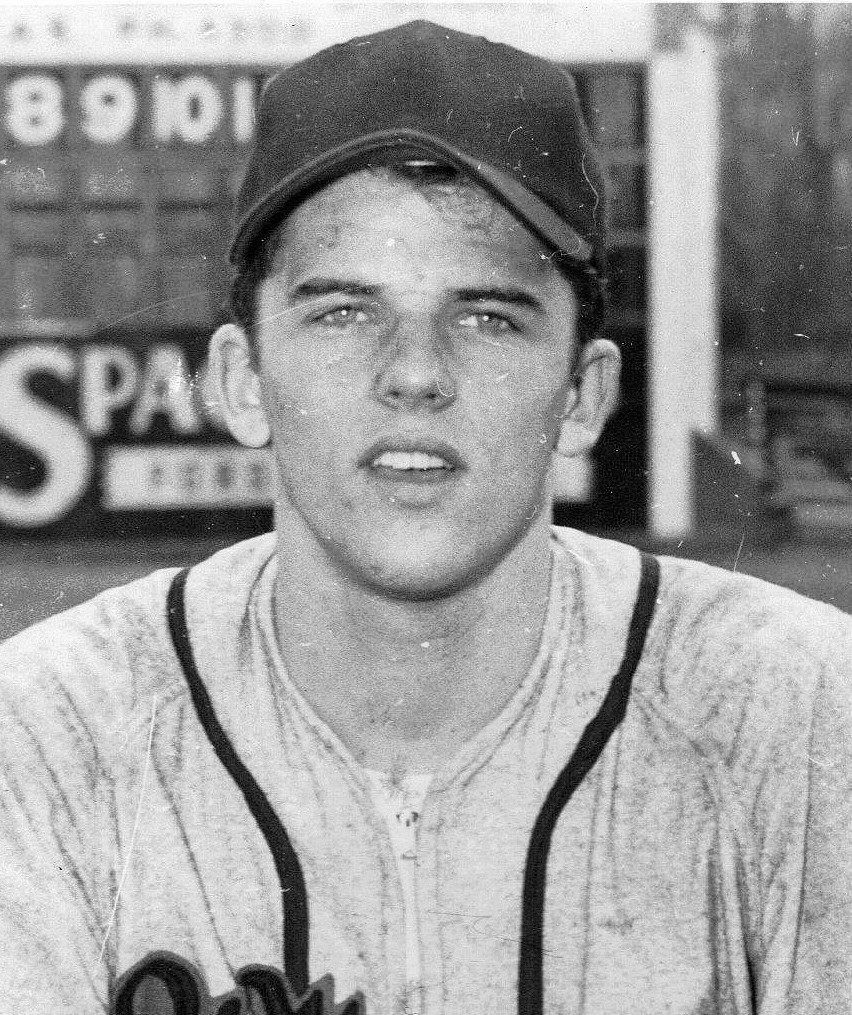
As fate would have it, in the fall of 1955 I received a letter from Rossiter inviting me to attend his 1956 edition of the school which was to run for two sessions in the first 10 weeks of the following year. There was only one catch...I had to pay my own way -- $25 a week, plus travel and room and board. At 17-years of age, several major league scouts had already started to pay attention to me during the baseball season of that past summer but I had yet to receive any official overtures from them.  

A high school dropout whose only ambition was to be a major league baseball player, I was all too ready to leave my $22.00-a-week clothing store job in Dresden to jump at any 
chance to launch a career on a far away field of dreams. My widowed mother, realizing that I was ready to spread my wings at such an early age and that I would never achieve the academic excellence that she had expected of me, she reluctantly gave me her blessing and helped me scrape together the necessary financial wherewithal to make my way to Cocoa, Florida on New Years eve of that year.  In a nutshell, that was the beginning of the rest of my life!
Me at the Jack Rossiter Baseball School
 in 1956.

A 48-hour Greyhound Bus ride later, I arrived at the white-stuccoed Seminole Hotel in Cocoa and was greeted by a rather rotund, smiling Jack Rossiter who emerged from a group of young fellows standing on the sidewalk and looking very much like the baseball players that they were.  After introductions, I was told that I would be billeted in a private home along with three others, all of whom proved to be Americans -- Ronnie Franjello of Boston, Star Todd of Quincey and Art Brizzi of New Jersey.

Baseball workouts and instructional drills were held each day, 11:00 a.m. to 3:30 p.m., at the local baseball field which was the summer home of the Cocoa Indians, a AA club in the Florida Baseball League. Rossiter was a bit of a philosopher who thought outside of the baseball box.  His aim was to not only develop baseball talent, but to build character in the young men under his tutelage. Each day he would gather us together in the outfield for some words of wisdom and exchanges on life in general.  He instructed us on how to conduct ourselves as we blended in to the Cocoa community as representatives of the baseball school.

Included in his lectures were advice on relationships that were inevitable with young ladies of the town and company that we might otherwise keep during our stay in Cocoa.  Borrowing or loaning money was a no-no..."Neither a borrower nor a lender be!" he repeated countless times.  He talked a lot about "focusing" and "extending" ourselves, not only in baseball but in the jobs that we might have as we progressed in life.  A staunch Catholic, Jack conducted prayers at the start of each day's training session.

One day he asked for a volunteer to talk about the person who was most responsible for us attending the camp and I talked about the sacrifices and support that my mother had made in order for me to be there. My verbal presentation sufficiently impressed Jack enough that he awarded me with a $10 bill and a trophy that I was later to give to my mother.

The aforementioned Bob Peters who followed me to Rossiter's school the next year, took copious notes during the group meetings convened by Rossiter.  One of the typically profound statements notarized by Bob had Jack stating emphatically: "Any fool can learn from his own mistakes but a wise man learns from the mistakes of others."

Bob attended the school in 1957 to better learn the art of catching but unfortunately suffered a health setback only a few months before his departure. "I probably should not have attended the school because I had been quarantined in the Wallaceburg hospital in November with suspected meningitis which necessitated a spinal tap," he explained recently.  "The baseball experience was great though and the coaching exceeded anything I had received before," he added.
~~~~~~~~~~~~~~~~~~~~~~~~~

Writer Paul Hemphill, in his book "Lost In The Lights" had a rather humorous and less glowing take on attending the Rossiter school the year before me (1955):  "I was deposited before 8 A.M. in front of the shabby Seminole Hotel where all players were told to report.  Lugging a new cardboard suitcase in one hand and my bat and glove in another, I checked into a room with only wooden floors and a creaking overhead fan," he writes.

..."I went to the end of the hall on the first floor and knocked lightly on the door.  'It's open,' a voice rasped, and I stepped inside.  Jack Rossiter -- a fat, garrulous man with bronze skin and blond wavy hair mindful of Liberace -- was sitting at a desk in his shorts and undershirt...

...'Checked in yet?' he said after introductions  'Yeah, I got something down the hall.'

'That's strange.'

'What?  Sir.'

'You don't look like the type.'

"Hunh?'

'Blonde, brunette or readhead?'

'A room!' I said.  'I got a room down the hall.'

"Jack Rossiter, the major league scout, was laughing uncontrollably now, his raucous howl pounding away at me while I wondered what to do with my hands.

"If Roger Kahn's postwar Brooklyn Dodgers were The Boys of Summer, then we were The Boys of Spring:  the culls, the dreamers, the ones who now had to pay someone to look at us...

..."A half dozen (players) had real ability and were quickly signed by Rossiter for the Senators' farm system, but the rest of us had little more than desire.  As the weeks passed working out and playing games under an ex-shortstop named Eddie Miller and an old pitcher named Pete Appleton, a frantic dread set in with those who remained unsigned.

"Where do you go from the Jack Rosseter baseball School?"
~~~~~~~~~~~~~~~~~~~~~~~~

On the field we learned about all aspects of the game of baseball and positional execution, in particular.  Ninety percent of which was completely new to me and very much an eye opener for kids like Bob and I who, unlike our American counterparts, attended with virtually no background of formal coaching. 

The school was very much like spring training with conditioning drills and exercises eventually followed by actual mock games.  Special instructors were former major league veteran players in the persons of Andy Seminick, Walter "Boom Boom" Beck and Pete Appleton, assisted by promising Washington Senators rookies of that year, Lyle Luttrell and John Schaive. Washington catcher Bob Oldis and outfielder Ernie Oravetz, both graduates of the Rossiter School from former years, dropped in for several guest coaching appearances.

As the camp wore on, minor league coaches, managers and scouts began appearing on the scene in the hopes of picking up some raw talent for the 1956 season.  One highly regarded prospect among us was a behemoth by the name of Blair Chapel, an outfielder/infielder.  I was asked to throw some batting practice for Blair so that he could show off his hitting prowess.  

I threw a half dozen soft pitches to Blair so that he could get good wood on the ball, but was subsequently chastised by Instructor Beck who was standing behind me on the mound.  "Those scouts in the stands are looking at you every bit as much as they are at him (Blair)," said a booming Boom Boom.  "Throw the sonofabitch ball past him!"  

With mixed feelings, I turned up the speed a notch or two on poor Blair as he flailed away in the batter's box.  He only managed to foul off several of the next couple of dozen balls I hurled at him and he was promptly instructed to take a seat in the dugout.  I felt bad, but what was I supposed to do?  Ironically, I would later sign a pro contract...Blair did not.  He would eventually go on however to have a respectable career with the Kansas City Monarchs and Satchel Paige's All Stars before ending up in the semi-pro Western Canada Baseball League.

It was customary each year for a select team from Rossiter's school to meet a team from the Sid Gordon Baseball School in neighboring Orlando and I was more than taken aback to be picked as the starting pitcher.  Before the game Rossiter came up to me in the dressing room to say that there was a guy outside who wanted to say hello.  Much to my surprise, it was Art Houle from Wallaceburg who just happened to be attending the Gordon camp.  Art, a lefthanded pitcher, did not play in the game but we had a good chat afterward...Small world!

I had one more trip to Tinkers Field in Orlando as part of a Senators "B"squad playing in a Grapefruit League exhibition game against a New York Yankees "B" team before heading to Donalsonville, Georgia and the lowly Class "D" Florida-Alabama League.  From the 250 players attending the Rossiter school that season, only five were successful in signing contracts -- and two of us were Canadians.  The other Canuck was Bob Crawford, a pitcher from Kenora.  The Americans -- Sammy Hernandez, Rip Sewell and Oddie James -- were older guys with at least one year of minor professional experience under their belts.

Before we broke camp in Cocoa, Rossiter and the other coaching staff invited me into their quarters under the bleachers and surprised me with a cake, complete with 18 candles, on the occasion of my birthday on March 1st. To my knowledge, it was unheard of them to recognize a player in that way and I was not only extremely honored but completely stunned.  To this day I cannot really account for why they singled me out in that special way.  

I have written previously about the "cup of coffee" I had in professional baseball with the Donalsonville Seminole Indians, but it was pretty heady stuff for a kid in his teens and still slightly damp behind the ears.  While it was all too brief, I got to play on my field of dreams and the memories were enough to last a life time.  Paul Hemphill was left slightly depressed by his experience, but his memories were sufficient to devote a chapter to it in his book.  Like me, he discovered another field of dreams as a sports writer.  Bob Peters found a niche in the automotive sales business and became a dealership executive.  All three of us still love the game of baseball and would play it today...If old bodies permitted.
Jack Rossiter with another
prospect.


I honestly feel that I took a major step towards being a man that summer of 1956, thanks to Jack Rossiter who I never had the privilege of meeting again.  I know that he continued running his baseball school well into the 1960s, but it is like he fell off the face of the earth after that.  He was a confirmed bachelor and outside of baseball a private man.  There is very little mention of him in baseball records and my research has yet to uncover even so much as an obituary for him.  Too bad!

Some people come and go in your life, others remain fondly in the far reaches of your mind, only to emerge nostalgically from time to time.  Like when you write a story about them.

15 February, 2016

EVERYONE CAN USE A HUG NOW AND THEN

An ordained friend of mine wrote recently about the need for school students to "connect" through technology today. He also commented on the irony that teachers are cautioned these days about "connecting" with students through old-fashioned hugs.

A sad fact is that spontaneous hugging seems to be on the decline in societies where fears of abuse and litigation override the simple pleasures of an affectionate hug.

What a shame! This, at a time in our day and age when I think that young people need assuring hugs from adults more than ever before. Boy, could I have used a few hugs from teachers in my day. The only physical contact that I can recall was the repetitive sting of a well-placed strap on the palm of my reluctantly outstretched hand.

As a male from the old school, I was naturally cautious about hugging at one time. Initially, when in doubt, I asked whether my potential 'hugee' wished to be hugged. The response was always a receptive one so I now just throw caution to the wind…What the heck! I’m not a school teacher, thank God.

Maybe this subject has something to do with my declining years. According to researchers, hugging and physical touch becomes increasingly important with age. The older you are, the more fragile you are physically, so contact becomes increasingly important for good health. Studies have shown that loneliness, particularly with age, can also increase stress and have adverse health effects. By hugging someone, we instantly feel closer to that person with a resultant decrease in feelings of loneliness.


Researchers also tell us that hugging results in a special chemical reaction that is conducive to a sense of well-being and bonding.

A recent news item from London, ON noted the available services of Dan Oudshoorn, a snuggle therapist who offers non-sexual snuggles to clients needing this kind of human contact. He states simply that "everyone deserves to be held. No one is untouchable."

Personally, I am happy to be the giver and recipient of spontaneous hugs when appropriate. As well as those traditional flowers, chocolates and cards, a hug also remains a timely gift for special occasions -- and beyond.

Let's be honest.  Everybody loves a hug…They cost nothing…They are priceless!

Hugs speak volumes when words fail.

08 February, 2016

ARE YOU A MODERATE-DRINKING SENIOR?... HERE'S TO YA!

Many of North America’s seniors may have an alcohol problem, but not the kind one would expect. It seems that many seniors may not be drinking enough to reap the research-backed benefits of moderate drinking. Those benefits include heart health, improved memory and cognition, better bone density, and reduced risks for some types of cancer and for developing Type 2 diabetes.

The answer to whether those findings mean that seniors should drink is not that clear. The findings apply only to moderate drinking, and that is defined as one drink a day for women and two for men. For the purposes of moderate drinking, a drink is defined as five ounces of wine, 12 ounces of beer and 1.5 ounces of distilled spirits.

Seniors who drink less than that apparently don’t share the benefits and the benefits seem to unravel and disappear with more than moderate drinking, which for seniors can cause its own set of problems. The findings also apply only to seniors in good health and not to those who take prescription drugs for a variety of ailments and over-the-counter medications for problems such as pain, sleep, and allergies, including such seemingly innocuous drugs as aspirin and ibuprofen. Any of them can interact with or be affected by alcohol.

Just how many seniors drink is not clear, though the 2012-13 National Epidemiologic Survey on Alcohol and Related Conditions III showed that 55.2 percent of adults over the age of 65 said they drank alcohol. Most of them did not report having a drinking problem, though some exceeded the “moderate drinking” recommendation.

Seniors tend to be more susceptible to the effects of alcohol than younger people, both because they metabolize it more slowly than younger people do and because they tend to have less water in the body. Consequently, seniors may have a higher concentration of alcohol in the body than younger drinkers, and that concentration stays higher for a longer time -- another reason to stick to moderate drinking.

It is also possible that seniors are more psychologically susceptible to the use of alcohol than their younger counterparts. Many have suffered through multiple losses and/or are themselves facing the possibility of a life-changing disability or a painful, chronic medical problem. While light-to-moderate drinking might be relaxing or sociable, relying on drink as an escape can make depression and a number of health problems worse.

Indeed, the problems associated with too much alcohol are both well-known and well documented, among them poor coordination leading to traffic accidents and falls, liver damage, and increased risk for some kinds of cancer. The combination of alcohol and medications, even those that are prescribed, can magnify those risks and should be sufficient reason to avoid even occasional heavy drinking.

Though dozens of studies show that moderate drinkers seem to be healthier than those who don’t drink at all and, at the opposite end, those who are heavy drinkers, the reasons for this are not clear. Perhaps moderate drinkers are simply healthier than their non-drinking or their heavily imbibing counterparts, or maybe something about the effects of alcohol itself accounts for the documented positive benefits. More than 60 studies suggest that moderate alcohol use can increase the levels of HDL, or good cholesterol, and reduce the incidence of heart attacks.

Also, we learn that alcohol in low doses may help prevent abnormal blood clotting and alcohol seems to have both anti-oxidant and anti-inflammatory properties. These heart-protective benefits do not seem to depend on the type of alcohol consumed, despite the much touted benefits of red wine, suggesting that alcohol itself is the benefactor.

One of the most intriguing findings about the benefits of moderate drinking comes from work done by a team of researchers from the American universities of Maryland, Kentucky and Texas who analyzed data from participants in the original Framingham heart study. Their conclusion: seniors, defined as 60 and older, who were not already suffering any form of dementia, showed improved ability to recall events and memories after light to moderate alcohol use.

Another study from Loyola University showed that moderate drinkers were 23 percent less likely to develop dementia and cognitive impairment. In the case of both heart disease and cognition, the working hypothesis is that moderate drinking improves blood flow, to the heart and heart muscle in one case and to the brain in the other. That improved circulation may account for the benefits.

Other research suggests that alcohol -- again, with the emphasis on “moderate” -- improves bone density, reduces the risk of Type 2 Diabetes by as much as 30 percent, and reduces the risk of developing gallstones. And as an added benefit for older women struggling to control their weight, a study published in the Annals of Internal Medicine in 2010 showed that women who were moderate drinkers were less likely to gain weight than those who did not drink. One suggested explanation was the possibility that moderate drinkers tended to eat less, particularly the kinds of carbohydrates implicated in weight gain.

All things considered, the question of whether seniors should follow the moderate drinking guidance needs to be made by each individual, ideally with input from a physician. Admittedly, this is a tricky question for physicians. While it is easy to advise a senior who exceeds the moderate drinking advice to cut back, a physician may be reluctant to suggest that a non-drinking senior should add a glass of wine to the daily regimen.

Personally, I enjoy a glass of wine as I prepare our evening meals. I also take ibuprofen for arthritic pain on an as-needed basis. My family doctor has never advised me otherwise, of course I have never volunteered the information either. I prefer to consider moderate consumption of the grape as an added tonic in my daily regimen…It works for me!

…But you are on your own dear reader, especially if you are over 65. To drink or not to drink – that is the question!